
“He whispers in the prime minister’s ear” – Inside János Lázár’s exile and return


János Lázár’s 2018 spat with Viktor Orbán was more heated than previously known. It took Lázár many years of hard work to return to the center of power, and he needed the help of Lőrinc Mészáros, a government near businessman and Orbán ally to do so. According to research by Direkt36, after 2022, Lázár actively sought out Orbán’s company, trying to convince him that he was far better prepared than his fellow ministers.
In 2018, Fidesz secured its third consecutive victory with a constitutional two-thirds majority, and on the surface, the party appeared united and disciplined. Behind the scenes, however, there was at least one dissatisfied politician who, despite withdrawing from the public eye, regularly voiced his dislike in hallway conversations.
This man was János Lázár, up until then arguable the second most powerful person in the government as Minister of the Prime Minister’s Office. Lázár, however, did not become a member of the new Orbán government formed after the April 2018 election.
Lázár did not like the fact that several politicians belonging to Fidesz’s younger generation had quickly risen to positions of influence. He particularly liked to take jabs at Gergely Gulyás, who took over the leadership of the Prime Minister’s Office from him in 2018. “Lázár would mock him behind his back, saying how poorly he was doing his job and criticizing the government press briefings held by Gulyás,” the source said.
Lázár was, in fact, particularly proud that, as a minister, he spent hours every Thursday answering journalists’ questions, and he believed that Gulyás was performing much worse in comparison.
Join the Direkt36 supporters’ group and get insight into investigative journalism! Details →
While talking with Fidesz lawmakers, Lázár repeatedly made fun of the embarrassment caused to Fidesz faction leader Máté Kocsis when a former liberal politician referred to him as a homosexual in one of her Facebook posts (Kocsis lost the lawsuit he filed on the issue). By joking about this, Lázár also undermined the authority of Kocsis in the eyes of other Fidesz MPs.
Behind Lázár’s taunting lied a deeper criticism. According to people close to him, he believes that there are two different types of Fidesz politicians. The first type consists of the younger, urban generation such as Ministers Gergely Gulyás and Antal Rogán, as well as faction leader Máté Kocsis, whom he considers “spoiled, too soft,” without firm beliefs, representing whatever the social majority happens to support at the moment.
The second type – according to a source familiar with his political thinking – where he also puts himself along with former president János Áder, House Speaker László Kövér, and Deputy PM Zsolt Semjén, is the “rural Fidesz.” According to Lázár, they are not characterized by pragmatic thinking, but rather by having visions and principles for which they try to win the support of the majority.
Lázár also dislikes Rogán and Gulyás because he believes he was pushed out of the government in 2018 because of their lobbying efforts. According to him, however, this group failed to handle the challenges posed by the Covid-19 pandemic and other crises, which is why PM Viktor Orbán called him back into the government in 2022. According to a source familiar with the politician, Lázár saw significant opportunities in his return; he felt he could finally get his revenge for the wrongs done to him.
Since then, Lázár has once again emerged as a key figure in the government and inside Fidesz. He has become one of the most active ruling party politicians in the campaign and has once again found his way into Viktor Orbán’s inner circle.
Direkt36 wanted to know how Lázár’s sidelining eight years ago unfolded and how he managed to return to the government and, with it, to the center of power. After speaking with nearly twenty sources with insights into the government, it became clear that he was sidelined in 2018 because Orbán himself felt that Lázár had too much ambition, and there were even rumors that he was eyeing the prime minister’s position.
Lázár then accepted that his time had not yet come and began rebuilding his position with the help of, among others, Lőrinc Mészáros, the billionaire friend of Orbán, who also lobbied Orbán on Lázár’s behalf during the formation of the 2022 government. After returning to the government, Lázár was actively seeking Orbán’s company and, during their one-on-one meetings, tried to convince the PM that he was better prepared than the other ministers and had a much clearer understanding of his colleagues’ portfolios.
We sent Lázár a detailed list of questions regarding the claims made in the article, but the politician did not respond. On behalf of Orbán, the Government Information Center labeled some of our questions as “fake news.” However, when asked how Orbán had handled Lázár’s ambitions to become prime minister prior to 2018, they replied, “well.” Mészáros also did not respond to our questions.
Chapter I: The Fall
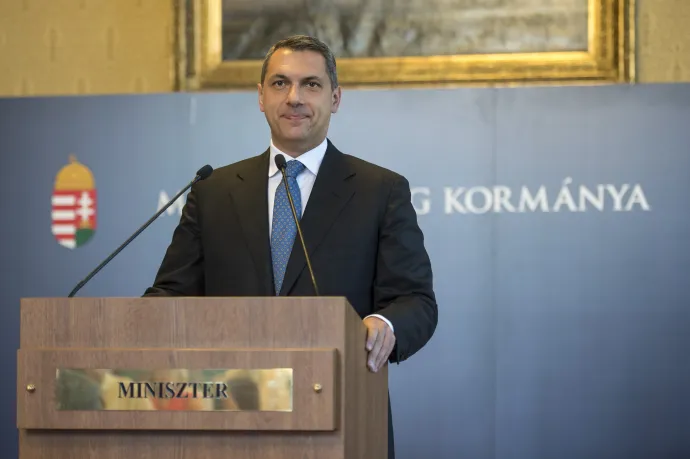
János Lázár listened in shock as the prime minister spoke on the morning of April 20, 2018, on Kossuth Radio, a station part of the government’s propaganda machine.
A few days after the election that resulted in yet another Fidesz victory, Orbán revealed an interesting detail about the composition of his new government. “I would like to restructure the central part, the brain center of the government; we modestly call this the Prime Minister’s Office. I would like to create a different kind of leadership structure here,” the prime minister explained. With this, he made it clear that he would dismiss Lázár, who headed the ministry.
Lázár learned of all this through the radio. Even before the interview, the politician had expected that at their upcoming meeting in a few days, Orbán would first discuss with him personally what role he intended for him in the next term.
According to one of his acquaintances, Lázár found the prime minister’s move so humiliating that he immediately called Orbán’s personal secretary and canceled his planned meeting with him. In order to quickly regain the initiative, he also spoke out publicly. He told the local radio station in Hódmezővásárhely that he was leaving the government and would return to his individual constituency for the next term. After that, he even switched off his phone.
According to an acquaintance, Lázár remained defiant even when he finally met with the prime minister at a later date.
“Orbán asked him what he wanted to do in the future, and János replied that he wanted to play tennis,” the source said.
The meeting went so badly that the two politicians didn’t speak to each other for nearly two years, and Lázár lost almost all of his political influence for a time.
Orbán put the politician in this unpleasant situation because he felt that Lázár was overly ambitious, and the conflicts he generated were straining the framework of the system the prime minister had built.
Not long before, it seemed that Lázár’s meteoric rise—having spent the first part of his political career as mayor of Hódmezővásárhely—was unstoppable. Orbán had taken notice of the politician, who performed skillfully and also aided Fidesz’s economic inner circle, even during Fidesz’s years in opposition. As a reward, Lázár became the leader of the Fidesz parliamentary group after the 2010 change of government. And starting in 2012, he headed Orbán’s office, the Prime Minister’s Office, first as a state secretary and later as a minister. In this role, he gradually amassed a vast portfolio, overseeing everything from the distribution of EU funds and foreign intelligence to the expansion of the Paks nuclear power plant.
Orbán entrusted him with so many responsibilities because Lázár was able to effectively enforce political will throughout the government apparatus. According to a former government official, Lázár also productively led the meetings of state secretaries, which were attended by dozens of deputy state secretaries. “If someone rambled on, he cut them off; if no new arguments were presented, he made a quick decision,” said one participant in the meetings, who noted that Lázár “thrived in this role.” At the weekly government briefings held for journalists, he also cultivated the image of a well-prepared politician.
However, in conveying Orbán’s political will, he clashed with numerous government figures. “He offended everyone; he charged ahead like a tank,” said a source with insight into the government’s work. Lázár’s confrontational personality generated further clashes beyond this. It became widely known within the party that if his fellow party members shared their critical opinions about Fidesz’s leadership with him in confidence, he would later pass this information on, thereby putting those who had trusted him in an awkward position.
Orbán’s trust in him, however, remained unshaken for a long time, and so Lázár allowed himself to become increasingly bold. He publicly criticized government officials and policies, which was highly unusual within the ruling party. In fact, at times it seemed as though he was even criticizing the prime minister. “While they’re watching football, I’m working,” he said, for example, in 2015, referring to the Fidesz leadership’s obsession with the sport.
As a result, it came up more and more often in conversations among Fidesz politicians that Lázár had ambitions to become prime minister.
“After a while, Lázár began to act like a potential successor, like an internal challenger,” said a former pro-government MP, referring to the fact that many within Fidesz felt Lázár had begun to compete with Orbán.
Lázár spoke openly about his ambitions within a smaller circle. According to a source close to the politician, in the second half of the 2014–18 term, Lázár explained to a group of friends at a restaurant that “he wasn’t turning against Orbán, but if circumstances turned out that way,” he wanted to become prime minister.
Since several people within Fidesz had learned of Lázár’s intentions, rumors spread within the ruling party that the minister was plotting behind Orbán’s back. According to sources within the ruling party, these rumors suggested that if Fidesz did not secure a convincing parliamentary majority after the 2018 election, Lázár would join forces with Jobbik to oust Orbán from power.
However, this was not supported by concrete evidence. According to a source close to Lázár, the rumors may have stemmed from the fact that Lázár, preparing for the post-Orbán era, had skillfully built his network of contacts, maintaining a dialogue with several politicians from major opposition parties, such as the left-wing MSZP and Jobbik, which was shifting from the far right toward the center. Among them was Gábor Vona, then-chairman of Jobbik.
According to a source familiar with Jobbik’s internal affairs, Lázár, while still serving as parliamentary group leader, would regularly sit down to talk with Vona over dinner.
“Lázár would explain the government’s actions at these meetings—what they were doing and why,”said the source, who has information about the meetings.
According to the source, however, these conversations were intended to help the two politicians get to know each other better, rather than to coordinate behind the scenes. (In response to our inquiry, Vona confirmed that after 2010 there was indeed a period when he dined with Lázár on a monthly basis; however, after 2014 these meetings ceased, and they met only in the corridors of parliament.)
Meanwhile, other matters also gave rise to mistrust toward Lázár. He oversaw the Information Office (IO), which was responsible for foreign intelligence and had engaged in politically risky operations. These included, for example, when the IO monitored the investigators from the EU’s anti-fraud office, OLAF, who were conducting an investigation in Hungary. Between 2015 and 2017, OLAF investigators examined public lighting projects carried out by the prime minister’s son-in-law, István Tiborcz, using EU funds. Through this surveillance, the IO was also able to obtain information regarding the Orbán family’s business affairs.
All of this aroused suspicion within the prime minister’s inner circle, and it was a recurring topic among pro-government politicians that Lázár was using the IO for political purposes.
“The rumor among Fidesz lawmakers at the time was that he was targeting the Orbán family,” said a source with insight into the ruling party’s operations regarding Lázár.
Lázár himself reinforced this mistrust by boasting in private circles that he possessed confidential information about pro-government politicians and businesspeople. “He’s the type who constantly hints and insinuates; that’s essentially his charm,” said a source close to Lázár.
At the same time, the prime minister took several steps to weaken Lázár. In the fall of 2015, Orbán appointed Antal Rogán as his chief of staff with ministerial rank. The ministry led by Rogán took over from Lázár the oversight of government communications and state advertising expenditures. With this move, the prime minister set the stage for a rivalry between Rogán and Lázár. A sign of this was that both politicians believed that issues embarrassing to them—such as Lázár’s pheasant hunting abroad and Rogán’s helicopter flights—had been made public due to the other’s scheming.
Lázár was not only bothered by Rogán’s growing influence. In the summer of 2016, government propaganda launched a personal attack against Zoltán Spéder, a banker with close ties to the government, while authorities simultaneously conducted searches at his home.
“It was like in The Godfather—it was spectacular, meant to send a message,” said a former government official about the coordinated operation, adding that Spéder had angered the prime minister by overstepping his bounds in the financial sector on his own initiative.
According to the source, the crackdown was also a message intended for Lázár. Lázár, who maintained a friendly relationship with Spéder, oversaw as minister those state-owned companies—the Hungarian Development Bank, the Hungarian Post—where the banker had gradually expanded his influence. Later, Orbán took these areas away from Lázár, while simultaneously ousting Spéder from all his key positions related to the economy and the media.
Lázár thus gradually became a liability for Orbán, who decided to entrust Gergely Gulyás with the leadership of the Prime Minister’s Office in his next government. “It’s typical of Orbán to occasionally put people in a jar and then take them later off the shelf,” said a former government official about Orbán’s personnel policy.
This is exactly what happened to János Lázár after the 2018 election, whom the prime minister placed on a distant shelf.
Chapter II: The Exile
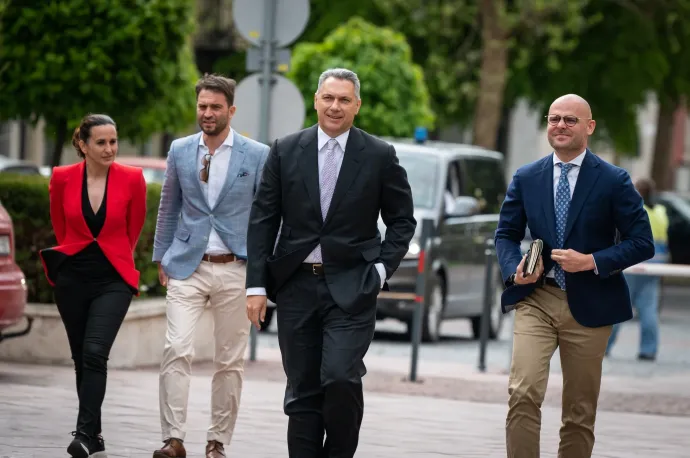
In the summer of 2018, Lázár was given an office in a secluded location instead of his former parliamentary office. He settled into one of the government’s administrative buildings on Iskola Street, near Batthyány Square.
Lázár did not choose this secluded location himself. The government assigned one of the smaller offices there to the politician, who had been appointed as the Prime Minister’s Commissioner for the Protection of Non-Smokers. For this position, which was not considered particularly politically significant, he was given a secretariat consisting of a single staff member.
All of this clearly demonstrated just how much Lázár’s situation had changed after his ouster from the government—a man who, at the height of his power, had commanded an apparatus of thousands.
Lázár was not only simply pushed out of Orbán’s inner circle, but leading government politicians who had previously clashed with him sought to curtail Lázár’s influence and attempted to oust his most loyal associates from their positions.
This also affected Nándor Csepreghy, one of Lázár’s confidants, who served as deputy minister in the Prime Minister’s Office until 2018. Although he had hoped to become a member of parliament, he was not even placed on a symbolic spot on the party list for the 2018 election, a sign that Lázár was being sidelined. According to a source familiar with the events, Csepreghy was later offered the chance to remain in the newly formed government, but “he would have to loosen his ties with János.” He refused to do so, and thus did not receive any position.
Lázár’s other close confidant, Ákos Krakkó, who handled his press affairs, faced a similar fate. After 2018, Krakkó wanted to return to his former workplace, Hír TV. Around that time, the channel had just been taken out of the ownership of Lajos Simicska—who had long built Fidesz’s economic base but had since turned against the prime minister—and had once again become a key player in the government’s propaganda machine. However, Hír TV ultimately did not rehire Krakkó. “They were blacklisted; they couldn’t get any position,” —said a source familiar with the events regarding Csepreghy and Krakkó.
After some time, the situation of Lázár’s two confidants was resolved. Both were hired by the Blue Planet Climate Protection Foundation, which János Áder had founded while he was still president. Csepreghy became the foundation’s director, while Krakkó became its communications director. In an interview, Lázár listed Áder—along with Simicska and Spéder—among those with whom he maintained a good personal relationship even after they had come into conflict with Orbán.
Join the Direkt36 supporters’ group and get insight into investigative journalism! Details →
However, Lázár was not able to keep all of his people by his side. Among them was Dávid Héjj, who served as Lázár’s chief of staff after 2010 and later as deputy state secretary at the Prime Minister’s Office. He owed his influence to his role in maintaining relations with members of parliament, which gave him precise knowledge of how to persuade individual politicians. After Lázár was ousted from the government in 2018, Héjj became a member of the Prime Minister’s staff. After some time, Orbán entrusted him with coordinating government consultations.
Because of this—according to a source familiar with the story—Lázár harbored a distinct grudge against his former subordinate.
Lázár clearly found it difficult to cope with the measures taken against him and his colleagues. In the period following the 2018 election, he adopted a defiant attitude in public and even snapped at Orbán.
When the new Fidesz parliamentary group was formed in May 2018, he did not attend the official group photo, claiming he had overslept. In the parliamentary chamber, he requested a seat in the back row—far from Fidesz’s leading politicians—citing that his former mentor, András Rapcsák, the former mayor of Hódmezővásárhely, had previously sat there.
Even from the back row, he closely followed Orbán’s speech at the inaugural session of the new National Assembly. In it, the prime minister outlined his government’s goals through 2030. The next day, Lázár said that one of the transportation development projects in Hódmezővásárhely could be completed within a few years. Thus, locals will soon “feel like they’re in 2030,” he said, referring to the Prime Minister’s statement from the previous day.
A few weeks later, Lázár sent another message to the prime minister. He posted a video on Facebook showing him playing cards with friends, and wrote in the caption: “On Friday night, they’re teaching me how to play ulti (a card game, liked by Orbán himself) in the hope of the future.” The politician was referring to Orbán’s earlier remark, made as a guest at the Bibó College, that his successor must possess numerous skills, including the ability to play ulti.
After a while, he stopped with these jabs, realizing he needed to curb his ambitions. He told an acquaintance at the time that the lesson he had learned from previous years was not to fight Orbán.
“He put it this way: he accepts Orbán’s reign, and as long as the king is in his place, he won’t try to seize the throne,” recalled the source,
who noted that Lázár had previously spoken often about “when his time would come,” when he would become prime minister.
Since Lázár had not achieved much in national politics during this period, he increasingly turned toward the business world. Even as head of the Prime Minister’s Office, he was already in contact with some members of the German and Austrian economic elite. “He has always been an aristocrat’s dependent, so to speak,” a government official said of him. By this, he meant that Lázár particularly enjoyed the company of members of wealthy dynasties with a long history, the so-called “old money.”
After 2018, he grew closer to the Austrian industrial magnate Turnauer family from his former circle of contacts. The Turnauers began building their business empire as early as the 1940s, during which time they were involved in the production of varnish and packaging materials, among other things, and also founded a private bank. The family was also known for having previously supported the far-right Austrian FPÖ, a party allied with Fidesz.
Lázár’s June 2018 financial disclosure statement revealed that the politician had acquired a 10 percent stake in the Turnauers’ Budapest-based real estate company, Divatcsarnok Projekt Zrt. This company owns the office building called Divatcsarnok on Andrássy Avenue, and the company is primarily engaged in leasing this property.
In 2022, Lázár told one of his acquaintances that the period after 2018 was partly about managing the Turnauers’ real estate portfolio in Hungary. During this time, he frequently visited the Austrian family in Vienna. “He immersed himself in it, learned, and mastered the real estate business,” said the source, who added that the politician spoke of all this with pride.
Meanwhile, he was also preparing for a return to government.
Chapter III: Mészáros steps in
In the first days of May 2022, Lázár met with an acquaintance he hadn’t seen in a long time.
As they got into the conversation, the issue of forming a government also came up. A few weeks earlier, Fidesz had once again won the parliamentary election, and Orbán had stated in a press release that it was conceivable that Lázár would become a minister again.
Lázár told his acquaintance that “he would very much like to be given the agriculture portfolio, expanded to include rural development, but that probably won’t happen.” Although he did not mention it, the reason for this was that the prime minister wanted to prevent Lázár from building a political power base for himself in the agricultural sector—where he had become increasingly comfortable in recent years.
Lázár also shared with his acquaintance that although Orbán did not want to grant his request, he had “put a lot of pressure on him” to become a member of his new government. To Lázár’s conversation partner, this came across as follows: In the deteriorating economic situation, Orbán wanted to have Fidesz’s “more autonomous figures” by his side, who could capitalize on any potential future loss of popularity for the government.
It took some time for Orbán to reach an agreement with Lázár regarding his government position. According to a source close to Lázár, the prime minister offered him, for example, oversight of the Paks expansion project, which was seriously behind schedule, but the politician did not accept it. “Whoever gets it is in for a rough ride”—according to a source close to the government, this is how Lázár explained to him why he turned down the position, which held little promise of political success.
The stalemate was resolved by Lőrinc Mészáros, an influential figure in the economic circle surrounding Fidesz, with whom Lázár had by then built an increasingly close relationship. According to a government official, Mészáros intervened because Orbán wanted to entrust the supervision of state investments to László Palkovics in his new government as well. However, Mészáros was dissatisfied with Palkovics because he felt the minister was not sufficiently cooperative with him. For this reason, Mészáros began lobbying the prime minister on Lázár’s behalf. And this, according to several government sources, contributed to the politician becoming minister of construction.
At the end of 2022—after Palkovics left the government—Lázár was also given the transportation portfolio. “He basically became the minister for Mészáros affairs,” said one government official about Lázár. By this, he meant that despite government budget cuts, Lázár’s portfolio remained crucial for Mészáros, who is a key player in state railway and construction contracts.
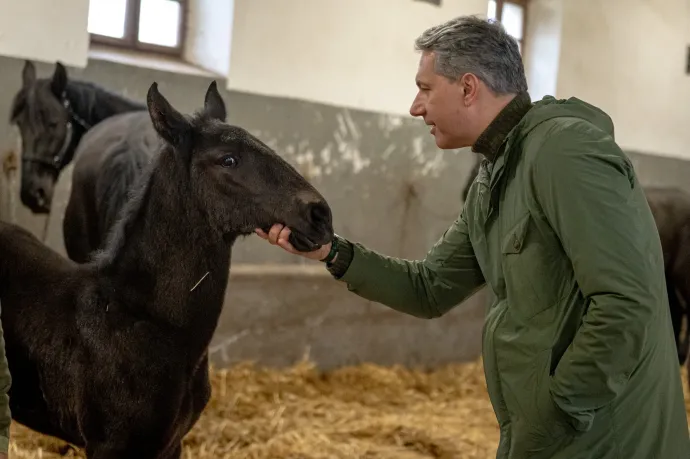
Lázár had begun to build ties with Mészáros much earlier. He took his first steps in this direction in the fall of 2018, after leaving the government, when he was appointed government commissioner responsible for the state-owned Mezőhegyes Stud Farm.
Farming was already familiar territory for Lázár at that time. His uncle owned a major agricultural company in Hódmezővásárhely, and the politician had been involved in its management since the early 2000s.
“He was the embodiment of the strong rural Fidesz supporter, for whom the land is important, who farms, and who is culturally tied to the gentry world of the Horthy regime,” said one opposition representative who has known the politician for a long time, speaking about Lázár.
This image was further reinforced after he was put in charge of the Mezőhegyes Stud Farm, one of the country’s largest agricultural estates.
At the state-owned farm overseen by Lázár, figures linked to Mészáros gradually assumed an increasingly prominent role. One of the major entrepreneur’s companies, Mészáros és Mészáros Zrt., won a contract worth nearly 22 billion forints (appr. 61 million euros at the time) in November 2021 to develop the Mezőhegyes irrigation system. In December 2021, Szabolcs Makai, CEO of Mészáros’s agricultural company, Talentis Agro Zrt., joined the board of directors of the stud farm.
According to a businessman close to the government, Lázár regularly visited Felcsút during this time, where Mészáros’s companies are headquartered. The businessman saw the politician waiting outside Mészáros’s office there on several occasions. “A man of great knowledge, a serious ally of mine”—according to the source, this is how Mészáros boasted to him about his relationship with Lázár.
During this period, Lázár not only grew close to Mészáros, but also settled his relationship with Orbán. In the fall of 2021, the prime minister visited Lázár and even posted a photo of them grilling fish together on the banks of the Tisza River. According to a political advisor with government connections, the two politicians had effectively reconciled at this point following their 2018 falling-out.
By the fall of 2021, Lázár already suspected that he would soon be back in office. After the 2022 election, following some back-and-forth, he eventually became Minister of Construction, and a few months later, he was also given the transportation portfolio.
The minister, however, had greater ambitions.
Chapter IV: On Orbán’s Side
In recent years, a recurring episode at cabinet meetings has been János Lázár getting into arguments with Agriculture Minister István Nagy.
“While Pista Nagy is speaking, Lázár starts talking louder and louder right in the middle of his sentence,” said a source familiar with what happens at government meetings, describing how the two ministers’ arguments typically begin.
According to the source, Lázár then tries to use data to prove why the agriculture minister is wrong on the issue at hand. István Nagy, in keeping with his usual demeanor, tends to respond to this in a restrained manner, but Lázár, constantly interrupting, does not always allow the agriculture minister to present his counterarguments.
Orbán does not usually intervene in these debates, giving free rein to the conflicts between his ministers.
“He likes and enjoys this sort of thing. He waits for things to resolve themselves,” the source said of the prime minister.
Lázár expresses his views not only on agricultural issues—a field he is familiar with—but also on other sectors. According to a source with inside information on government meetings, in addition to István Nagy, he has also had clashes with Márton Nagy, the minister of national economy, and Csaba Lantos, the minister of energy.
Lázár is so confident partly because he has reestablished a close relationship with the prime minister in recent years. “He’s been working on Orbán since 2022,” said one government official, referring to the fact that Lázár specifically sought out the prime minister’s company. Even during breaks in cabinet meetings, he tried to seize the opportunity to exchange a few words with Orbán in private.
“He whispers in the prime minister’s ear,” said the government official, noting that during their personal meetings, Lázár tried to convince Orbán that he had a better grasp of certain issues than the relevant minister. According to one of Lázár’s acquaintances, the politician even boasts that while traveling from Hódmezővásárhely to Budapest, he reads up on other ministers’ portfolios, so he knows more about them than they do.
“After a while, Orbán came to see Lázár as someone who is always on hand, someone he can count on, someone who is prepared,” the government official said.
According to the source, because of his close working relationship with Orbán, Lázár prefers not to bring proposals before the government that he hasn’t discussed with the prime minister beforehand. He thus always frames his remarks in such a way that he is effectively presenting the proposal at Orbán’s request. “After that, it’s hard to argue against them,” said the source, noting that this limits other government members’ ability to voice criticism.
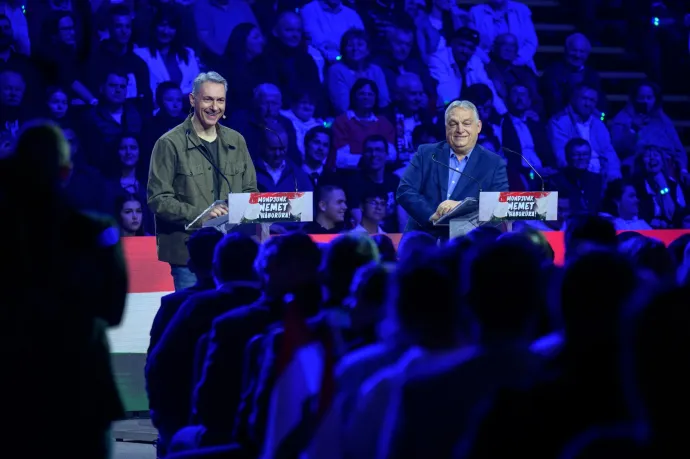
Lázár also likes to emphasize in public that he frequently consults with Orbán. During his campaign events, he has mentioned on several occasions that the prime minister called him on his way there, and that he will report back to him after the forum about what was said.
Orbán also insists on these regular conversations. According to a source with ties to the government, it is characteristic of the prime minister to gather information by regularly calling people on the phone and asking them, “What’s the news? What have you heard?” According to the source, in recent times, in addition to Foreign Minister Péter Szijjártó, he has been particularly fond of calling Lázár.
Orbán was also impressed by how Lázár reacted to the Tisza’s flooding in the spring of 2025. It was then that Lázár launched his series of events called “Lázárinfó,” where anyone could ask questions freely. He explained this by noting that while Fidesz had held almost exclusively closed-door events prior to the current election campaign, the leader of the opposition, Péter Magyar spoke publicly before crowds gathered in towns and villages. Lázár sought to take on Magyar through his forums.
Although Fidesz voters welcomed Lázár’s entertaining, confident performances, several within the ruling party criticized the “Lázárinfos.” A government source said as early as last summer that, according to Fidesz’s campaign staff, Lázár’s presentations “completely shift the focus” and divert attention from other important campaign issues. According to another source, government officials were displeased that Lázár had criticized several pro-government figures, such as Mészáros, during his forums. Although Mészáros had previously helped facilitate Lázár’s return, their relationship had since soured.
Orbán, however, liked Lázár’s posts and repeatedly assured his minister of his support. According to a government source, the fact that the statements made on Lázár’s forums generated public debate further strengthened Lázár in the prime minister’s eyes.
“He took away from it that Lázár is a good politician, which is why he is being attacked. In his view, anyone who isn’t attacked can’t be a good politician,” the source said of Orbán’s thinking.
According to the source, all of this contributed to the prime minister eventually instructing Fidesz constituency chairmen to invite Lázár to their forums.
As the parliamentary election approached, the Minister of Construction thus played an increasingly important role in the campaign. He not only toured the constituencies but also became involved in the selection process for Fidesz’s independent candidates.
According to one of the party’s independent candidates, Lázár participated in the meetings held in the spring and summer of 2025, during which the party leadership interviewed Fidesz’s individual candidates. At the meetings held at Fidesz’s headquarters on Lendvay Street in Budapet, in addition to the candidates, Gábor Kubatov, Fidesz’s party director; Gergely Gulyás, Minister of the Prime Minister’s Office; Dávid Héjj, government commissioner responsible for intergovernmental coordination; one of Fidesz’s regional directors; and Lázár were usually present.
During these meetings, they discussed the situation in the given constituency, the candidate’s level of support, how to secure a victory, and what kind of assistance the candidate might need. Lázár attended the meetings in his capacity as Minister of Construction and Transportation. “Infrastructure issues generally came up in every district; Lázár took these on himself and indicated that he would handle them,” said one participant. All of this strengthened Lázár’s influence within the party, since if he pushed a project in a given constituency, it increased the candidate’s chances of winning.
Join the Direkt36 supporters’ group and get insight into investigative journalism! Details →
Lázár’s seemingly unstoppable rise came to a halt when, at a forum this past January, he spoke disparagingly about the Roma community, which is considered one of Fidesz’s key voter bases. He said that Roma people constitute the domestic labor reserve, who could, for example, be put to work cleaning the “filthy restrooms” on Intercity trains. Although Lázár initially defended his remarks, he later apologized after, according to a government source, Orbán firmly instructed his minister to put an end to the matter.
According to an advisor familiar with the politician and connected to the government, Lázár’s statement, which put the government in an awkward position, came as no surprise. “He’s a creative, impulsive politician, and the kind of person who would sell his soul for a good joke,” the source said, noting that a few weeks later, Lázár was already joking about Orbán’s weight. He mentioned that meat consumption among Hungarian men has increased in recent years, “and not all of it is on the prime minister.”
According to the source, Lázár is otherwise pessimistic about the parliamentary election and puts Fidesz’s chances of victory at just 50 percent. And if they do win on April 12, he would become Minister of Agriculture. In this role, he aims to ensure that the proportion of Hungarian ownership in agriculture—from production to trade—is as high as possible compared to foreign players. “Between 2026 and 2030, if you and Viktor Orbán give me the opportunity, I will turn the rural agricultural world upside down—I guarantee it,” he said of his plans at a February Lázárinfo event.
Cover picture: Máté Fillér / Telex
